

How Long Does Postpartum Depression Last and What Does It Depend On? When Is Intensive Intervention Needed? | Safe and Sound
When most people realize they or a loved one is experiencing postpartum depression, the first question that comes to mind isn't "What's the cause?" or "What should I do?" but rather: "How long does postpartum depression last?"
This isn't a question for an impatient person. It's a very human question from someone who is tired, struggling through each day, and needs to know how much longer the journey ahead is. A mother needs to know so she can keep going. A husband needs to know how long the journey ahead is. The family needs to know so they don't inadvertently give up support too soon.
But the truth is there's no single number that applies to everyone. And it's the common misconception that "it will just pass," that simply waiting long enough will make everything alright, and that many cases of postpartum depression persist without timely support.
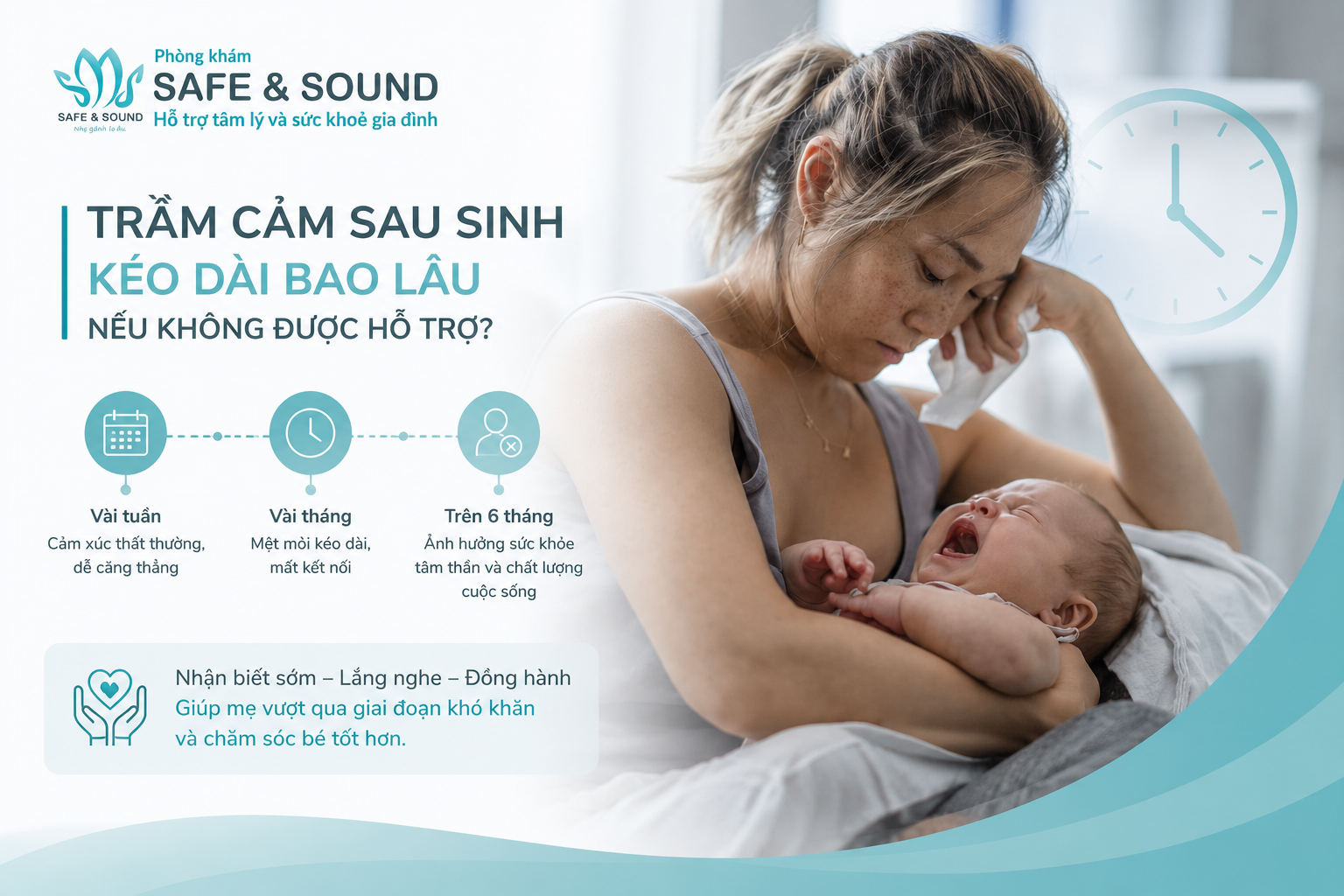
How long does postpartum depression last without support?
This question may seem simple, but it's one that many mothers and families lack the information to answer correctly. This lack of information, coupled with the belief that "it will all be alright," leads to many cases dragging on much longer than necessary. To understand why, we need to look at both sides: the actual length of time the situation lasts and the psychological reasons why many people continue to wait instead of seeking support.
- The Real Numbers You Need to Know
Postpartum depression is not the same as baby blues—the mood swings in the first few days after childbirth that usually resolve on their own within two weeks as hormones stabilize. Postpartum depression is a real mental health condition, and if not properly identified and treated, it can last for months.
Many studies show that without any intervention, postpartum depression typically lasts from six months to a year. Some cases, especially those with more severe symptoms or less support, may last even longer. This doesn't mean the condition can't improve, but rather that complete recovery without any support requires significantly more time than most people realize.
And during that long period, the mother is not only enduring hardship but also trying to care for a young child, maintain relationships, and, in many cases, return to work. It's a huge burden for one person to carry alone for months on end.
- Why Do So Many People Just Wait Instead of Seeking Support?
Knowing that postpartum depression can last for such a long time, the natural next question is, why do so many people still not seek support sooner? The answer is often not simple.
Some people tell themselves, "I'll be okay in a few days," and continue waiting week after week, month after month. Others aren't sure if what they're going through is "serious enough" to be called depression and fear that talking about it will make them seem like they're exaggerating. Some don't want to bother their already busy husbands or families. And some fear that admitting they're not okay will make others doubt their ability to be mothers.
All those thoughts are very real and understandable. But they are precisely what cause unnecessary delays. This isn't the mother's fault; it's a consequence of a lack of adequate information about postpartum depression and a lack of a safe environment to talk about what she's going through without fear of judgment.
See also: 6 warning signs of postpartum depression!
Recovery doesn't mean "going back to how things used to be."
One of the less-discussed but often confusing aspects for mothers during their recovery is the expectation that, after treatment, everything will return to how it was before giving birth. When that doesn't happen, and they feel they are still different in some way, many begin to worry that they "haven't fully recovered" or "something is still wrong."
But recovering from postpartum depression isn't about turning back time. Childbirth is a transformative experience that changes a woman on many deep levels: physically, psychologically, and in her self-perception and outlook on life. After experiencing postpartum depression, that change is even more profound. Expecting things to go back to how they were before is unrealistic and, more importantly, unnecessary.
Recovery is the process of rebuilding a new state of balance. It doesn't necessarily have to be exactly the same as before, but it can certainly be a stable, meaningful, and positive state in its own way. Many mothers who have overcome postpartum depression share that they understand themselves better, know what they need better, and are able to set better boundaries than before giving birth. It's not about going back to how things were; it's about becoming a different version of themselves and, in many ways, a more mature version.
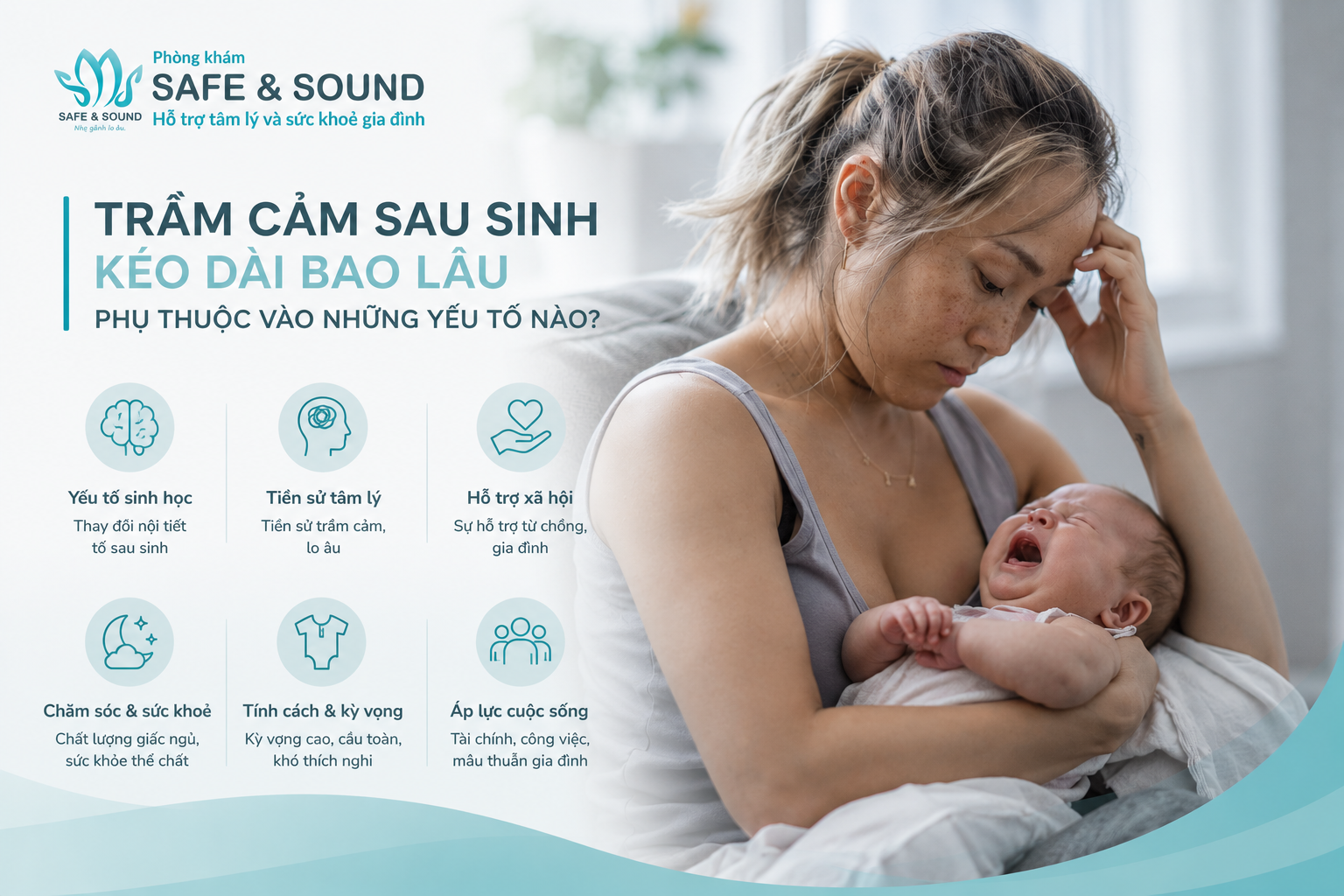
How long does postpartum depression last, and what factors influence its duration?
There isn't one single number that works for everyone, because recovery time depends on many different factors, and many of those are entirely controllable.
- Time of Identification and Initiation of Support
This is the factor that has the greatest impact on recovery time. Mothers who are identified and begin receiving support early, whether from family, mental health professionals, or doctors, tend to recover significantly faster than those who are diagnosed later, after many months.
The reason isn't simply "getting help sooner." When postpartum depression persists without intervention, symptoms tend to worsen over time, become more deeply ingrained in the mother's thought and emotional habits, and become more difficult to treat when it's finally identified. Conversely, early intervention helps break that cycle before it becomes severe and difficult to manage.
- Level of Support from Family and Relatives
The mother's environment greatly influences the speed of recovery, sometimes even more than the treatment itself. A mother who is genuinely listened to, whose burden of childcare is shared, who isn't judged for expressing difficult emotions, and who has at least one person genuinely checking on her and not just the baby often recovers significantly faster.
Conversely, mothers who bear the physical and emotional burden alone, living in an environment where their feelings are not acknowledged or are downplayed, or facing additional pressure from family expectations, often have a much longer and more difficult recovery journey, even while undergoing treatment.
- Mental Health History and Severity of Symptoms
Individuals with a history of depression or anxiety before pregnancy, or who have experienced depression during pregnancy, often require a longer recovery period and more intensive intervention compared to those experiencing mental health issues for the first time. This isn't because they are "weaker," but because their brains already have established neural pathways associated with depression, and changing those pathways requires additional time and appropriate support.

The severity of symptoms at the outset is also a crucial factor. Mild to moderate symptoms often respond better and more quickly to support measures such as psychotherapy. More severe symptoms, especially those significantly impacting the ability to care for a child or involving negative thoughts about oneself or the child, usually require a combination of interventions and a longer recovery time.
When is Intensive Intervention Necessary?
Many mothers wonder if their condition is "severe enough" to require professional help. The practical answer is: you don't need to wait until it's "severe enough." However, there are some specific signs that indicate it's time to seek professional help instead of continuing to manage on your own.
|
Token |
Real-life manifestations |
|
Symptoms last for more than 2 weeks. |
Feelings of sadness, emptiness, or anxiety that do not subside even when circumstances improve. |
|
Impact on the ability to care for children. |
Difficulty concentrating while caring for a child, feeling distant or emotionally detached from the child, and excessive worry about the child's health. |
|
Affects basic living conditions. |
Prolonged insomnia or excessive sleep, loss of appetite or uncontrolled eating, and inability to perform daily activities. |
|
Withdraw completely |
Not wanting to see anyone, cutting off contact with friends and family, feeling like no one understands me. |
|
Think persistent negativity |
Constantly blaming yourself, feeling like a bad mother, being pessimistic about the future, or feeling like things will never get better. |
|
Appear worrying thoughts |
Having thoughts of self-harm or harming your child is a sign that you need to seek immediate help. |
If you notice three or more of the signs in the table above and they have lasted for more than two weeks, it's time to seek professional help. Don't wait until things get worse to get help.
>> See also: Helping postpartum women overcome depression: the importance of professional mental health support
What Helps Shorten Recovery Time?
Knowing that recovery time depends on many factors, the next practical question is, what can be done to shorten that journey?
Seeking early professional assessment is the most important and impactful step. It's not because experts have "magic powers," but because an accurate assessment helps determine precisely where the mother is on her journey, what kind of support she needs, and what factors require special attention. Early, targeted treatment is always far more effective than delayed treatment when the situation has become more complicated.

Creating a supportive and conscious environment around the mother is equally important. This doesn't necessarily mean having more people to help with childcare, but rather having at least one person who genuinely listens to the mother without judgment, without rushing to offer advice, and without shifting the conversation to the baby.
Maintaining basic daily routines—sleeping when possible, eating regular meals, and going outside even for short walks—is not a solution to postpartum depression, but it provides a foundation to help the body and mind have the resources to respond to treatment. When the body is too exhausted, even effective psychological therapy takes longer to show results.
And finally, and perhaps most importantly, stop putting pressure on yourself to recover quickly. The pressure to recover within a certain timeframe, to feel better by a specific milestone, not only doesn't help but also hinders recovery. Recovery doesn't happen on a schedule; it happens when your body, mind, and living circumstances are properly supported for a sufficient amount of time.
Conclude
The duration of postpartum depression isn't a fixed number, and that's actually good news, not bad. Because it means the recovery process isn't entirely out of control. There are things mothers, families, and professionals can do together to significantly shorten that journey.
The most important thing isn't waiting to see how long it takes for it to go away on its own but recognizing it early, finding the right support, and not letting yourself suffer alone for unnecessary months.

At SNS (Safe & Sound Clinic), we understand that every mother has a unique journey, and no journey is too short or too long to be accompanied. If you're wondering where you are on that journey and what your next step should be, we're here to help you find the answers.
